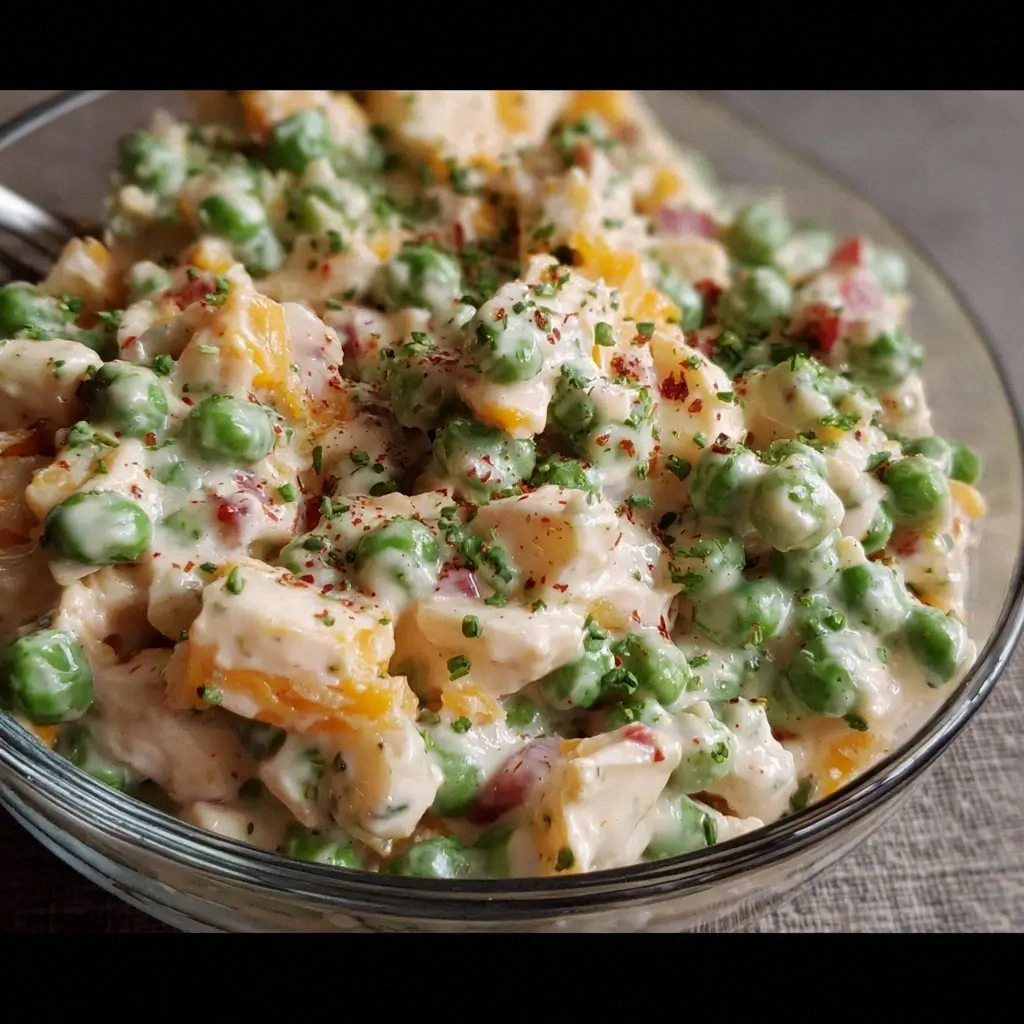
Picture this: you’re standing in a cramped kitchen, the fridge door swinging open like a stage curtain, and you’ve just realized you’re short on a crowd‑pleaser for the upcoming dinner party. You’ve tried every pea‑salad recipe you’ve ever found—some were bland, others too dry, and a few even tasted like they’d been left in a snowstorm. I was in that exact situation, juggling a pot of peas and a block of cheddar that had been chilling for days, when an idea popped into my head like a sudden burst of sunshine on a gray morning. The result was a creamy, vibrant, and utterly addictive pea salad that not only turned heads but also left everyone begging for a second bite.
The first thing that struck me was the texture—peas that were perfectly tender, not mushy, each bite releasing a sweet burst that danced on the tongue. The cheddar, grated with a fine wheel, melted into a silky sauce that clung to every green speck, while a splash of lemon juice added a bright, almost citrusy zing that cut through the richness. The air in the kitchen was filled with the scent of fresh mint, the sharpness of mustard, and a faint, comforting aroma of toasted walnuts. My ears were tuned to the gentle pop of peas as they steamed, the rhythmic clack of the spoon against the bowl, and the quiet sigh of satisfaction that follows a well‑crafted dish. I could almost taste the creamy coat, the peppery bite, and the subtle crunch of nuts all at once—this was not just a salad; it was a symphony of flavors.
What makes this version stand out is that it breaks the mold of typical pea salads. Most recipes rely on a simple vinaigrette or a dry mix, but I replaced the standard dressing with a homemade mayonnaise‑mustard blend that gives the dish a velvety texture while keeping it light enough to enjoy as an appetizer or a side. I added a splash of fresh lemon juice, which not only brightens the entire plate but also acts as a natural preservative, extending freshness. The inclusion of toasted walnuts or pine nuts adds a delightful crunch that contrasts beautifully with the smooth cheese sauce. Finally, the subtle addition of mint or parsley injects a herbal freshness that lifts the dish, making it feel fresh and summery even when served in winter.
I dare you to taste this and not go back for seconds. The combination of creamy, crunchy, and zesty elements is a winning formula that will have your guests raving about the next time you host. And trust me, if you’ve ever struggled with pea salads that taste like they’ve been sitting in a bowl for hours, you’re not alone—this is the fix you’ve been searching for. Picture yourself pulling this out of the fridge, the whole kitchen smelling incredible, and watching as people reach for the first spoonful. Let me walk you through every single step—by the end, you’ll wonder how you ever made it any other way.
What Makes This Version Stand Out
- Taste: The marriage of sharp cheddar and sweet peas creates a flavor profile that’s both comforting and exciting. The lemon’s brightness cuts through the richness, leaving a clean finish.
- Texture: Creamy sauce, crisp peas, and crunchy nuts deliver a mouthfeel that’s never monotonous. Each bite offers a new sensation.
- Simplicity: With only a handful of ingredients, the recipe is quick to assemble, making it perfect for last‑minute gatherings.
- Uniqueness: The homemade mayo‑mustard base is a game‑changer, giving the salad a silky coat that sets it apart from standard vinaigrette versions.
- Crowd Reaction: Friends and family rave about how it’s the best version of pea salad they’ve ever tasted, and I’ve heard it called “the ultimate crowd‑pleaser.”
- Ingredient Quality: Fresh, high‑quality peas and sharp cheddar are key. The better the cheese, the richer the sauce.
- Cooking Method: Quick steaming and immediate chilling preserve the peas’ bright color and firm bite.
- Make‑ahead Potential: This salad can be prepared up to 24 hours in advance, making it ideal for busy hosts.
Inside the Ingredient List
The Flavor Base
The backbone of this salad is the homemade mayo‑mustard blend. By mixing equal parts mayonnaise and Dijon mustard, you create a sauce that’s both smooth and slightly tangy. The mustard adds depth and a subtle heat that balances the sharp cheddar’s richness. If you’re a fan of a milder flavor, reduce the mustard to half a tablespoon, but remember it’s the key to that velvety coating.
The Texture Crew
Fresh peas are the star of the show, but you can also use frozen peas that have been blanched and cooled. They retain their bright green color and firm bite. The cheddar provides a creamy, gooey element that clings to each pea, creating a mouth‑watering contrast. Toasted walnuts or pine nuts add a satisfying crunch that breaks up the smoothness.
The Unexpected Star
Mint or parsley is the unsung hero that brings a herbal freshness. It lifts the dish, making it feel light and summery even in winter. If you’re not a fan of mint, try chopped chives for a milder, onion‑like note. This subtle herb balances the cheese’s sharpness and the lemon’s acidity.
The Final Flourish
A splash of lemon juice is essential; it brightens the entire plate and acts as a natural preservative. Garlic powder or minced fresh garlic adds a layer of warmth and complexity. Salt and pepper are the final seasonings that bring everything together. A pinch of smoked paprika can add a smoky undertone for those who love a little extra depth.
Everything’s prepped? Good. Let’s get into the real action, where the magic truly happens. Remember, the key to this salad’s success lies in the balance of flavors and textures, so pay close attention to each step. We’ll start with the peas and gradually build the sauce, ensuring every component is at its peak.
The Method — Step by Step
- Steam the peas. Bring a pot of salted water to a rolling boil. Add the peas and cook for 2–3 minutes until bright green and tender. Immediately transfer them to a bowl of ice water to halt the cooking process. Drain well and pat dry with a paper towel to remove excess moisture. This ensures the peas stay crisp and prevents them from becoming mushy in the salad.
- Toast the nuts. In a dry skillet over medium heat, toast the walnuts or pine nuts until fragrant and golden. Stir constantly to avoid burning. Once toasted, remove from heat and let cool. The nuts add a crunchy texture and a nutty aroma that complements the creamy sauce.
- Make the sauce. In a large mixing bowl, combine the mayonnaise, Dijon mustard, lemon juice, garlic powder, salt, and pepper. Whisk until smooth and slightly thickened. Taste and adjust seasoning—add more lemon if you want extra brightness, or more mustard for a sharper bite. This sauce will coat the peas and cheese, creating that silky finish.
- Fold in the cheese. Add the shredded cheddar to the sauce, stirring gently until fully incorporated. The cheese melts into the mayo‑mustard base, forming a rich, velvety coating that clings to each pea. Be careful not to over‑mix, as the cheese can become too soft.
- Combine peas and nuts. Gently fold the cooled peas and toasted nuts into the sauce. Use a large spoon to keep the peas whole and preserve their bite. The nuts add crunch, while the peas bring sweetness and color.
- Add herbs. Sprinkle chopped mint or parsley over the salad. Fold lightly to distribute the herb throughout without bruising the greens. The herbs add a fresh, herbal note that brightens the overall flavor profile.
- Chill. Cover the bowl with plastic wrap and refrigerate for at least 30 minutes, or up to 24 hours. Chilling allows the flavors to meld and the sauce to thicken slightly, creating a more cohesive dish.
- Serve. Before serving, give the salad a gentle stir. Garnish with a few extra toasted nuts or a sprinkle of fresh herbs for a polished look. Serve chilled or at room temperature, and watch your guests delight in the creamy, crunchy, and zesty experience.
That’s it—you did it. But hold on, I’ve got a few more tricks that will take this to another level. The next section is all about insider tips that will make your salad shine even brighter. Trust me, once you master these nuances, you’ll never settle for an ordinary pea salad again.
Insider Tricks for Flawless Results
The Temperature Rule Nobody Follows
Many people think cold peas are the best, but steaming them at just the right temperature preserves their texture. Over‑steaming can turn them mushy, while under‑steaming leaves them raw. Aim for a quick 2‑3 minute boil, then shock them in ice water. This technique locks in color and firmness, making each bite pop with freshness.
Why Your Nose Knows Best
The aroma of toasted nuts is a subtle indicator of their readiness. If they’re still raw, the scent will be faint and bland. As they toast, they emit a warm, nutty fragrance that signals they’re perfect for the salad. A quick sniff can save you from a bland crunch.
The 5‑Minute Rest That Changes Everything
After you’ve folded the peas into the sauce, let the mixture rest for five minutes before chilling. This brief pause allows the flavors to meld, and the sauce to thicken slightly. It also gives the peas time to absorb the dressing, resulting in a more cohesive bite.
Avoid the “Cheese‑Only” Mistake
Some recipes call for adding the cheese directly to the peas without a sauce. This can make the salad greasy and unevenly coated. By incorporating the cheese into a mayo‑mustard base, you create a uniform, silky coating that enhances every pea.
The Secret to a Long‑Lasting Freshness
Add a splash of lemon juice right before serving. The acidity not only brightens the dish but also helps keep the peas crisp for longer. If you’re preparing the salad ahead of time, a tiny drizzle of lemon juice before chilling can preserve that bright, green vibrancy.
Creative Twists and Variations
This recipe is a playground. Here are some of my favorite ways to switch things up:
Smoky Chipotle Version
Add a teaspoon of chipotle in adobo for a smoky heat that pairs beautifully with the sharp cheddar. The peppery undertone adds depth, making the salad a perfect side for grilled meats.
Vegan Takeaway
Replace the mayo with a plant‑based alternative and swap the cheddar for a vegan cheese substitute. The result is a creamy, dairy‑free salad that still delivers that rich, cheesy flavor.
Pesto Power
Stir in a tablespoon of basil pesto for an herbaceous twist. The pesto adds a burst of green and a slightly nutty flavor that complements the peas and nuts.
Breakfast Boost
Serve the salad over a bed of sautéed spinach and top with a poached egg. The yolk adds richness, turning the dish into a hearty breakfast or brunch option.
Mediterranean Flair
Add diced cucumbers, cherry tomatoes, and olives for a Mediterranean touch. The bright colors and briny olives give the salad a fresh, summery vibe.
Sweet & Savory Fusion
Fold in a handful of dried cranberries or raisins for a touch of sweetness that balances the sharp cheddar. The contrast between sweet and savory makes the salad irresistibly complex.
Storing and Bringing It Back to Life
Fridge Storage
Store the salad in an airtight container in the refrigerator for up to 24 hours. Keep it chilled to maintain the peas’ crispness and the sauce’s smooth texture. When ready to serve, give it a gentle stir to redistribute the dressing.
Freezer Friendly
For longer storage, place the salad in a freezer‑safe container and freeze for up to two weeks. Thaw overnight in the refrigerator before serving. The peas may soften slightly, but the flavor remains intact.
Best Reheating Method
If you need to reheat the salad, do so gently. Warm it in the microwave on low power for 30 seconds, then stir. Add a splash of water or a drizzle of olive oil to restore moisture and keep the sauce silky.
Add a tiny splash of water before reheating — it steams back to perfection. This trick ensures the peas stay bright green and the sauce doesn’t dry out. The end result is a salad that tastes as fresh as the day it was made.