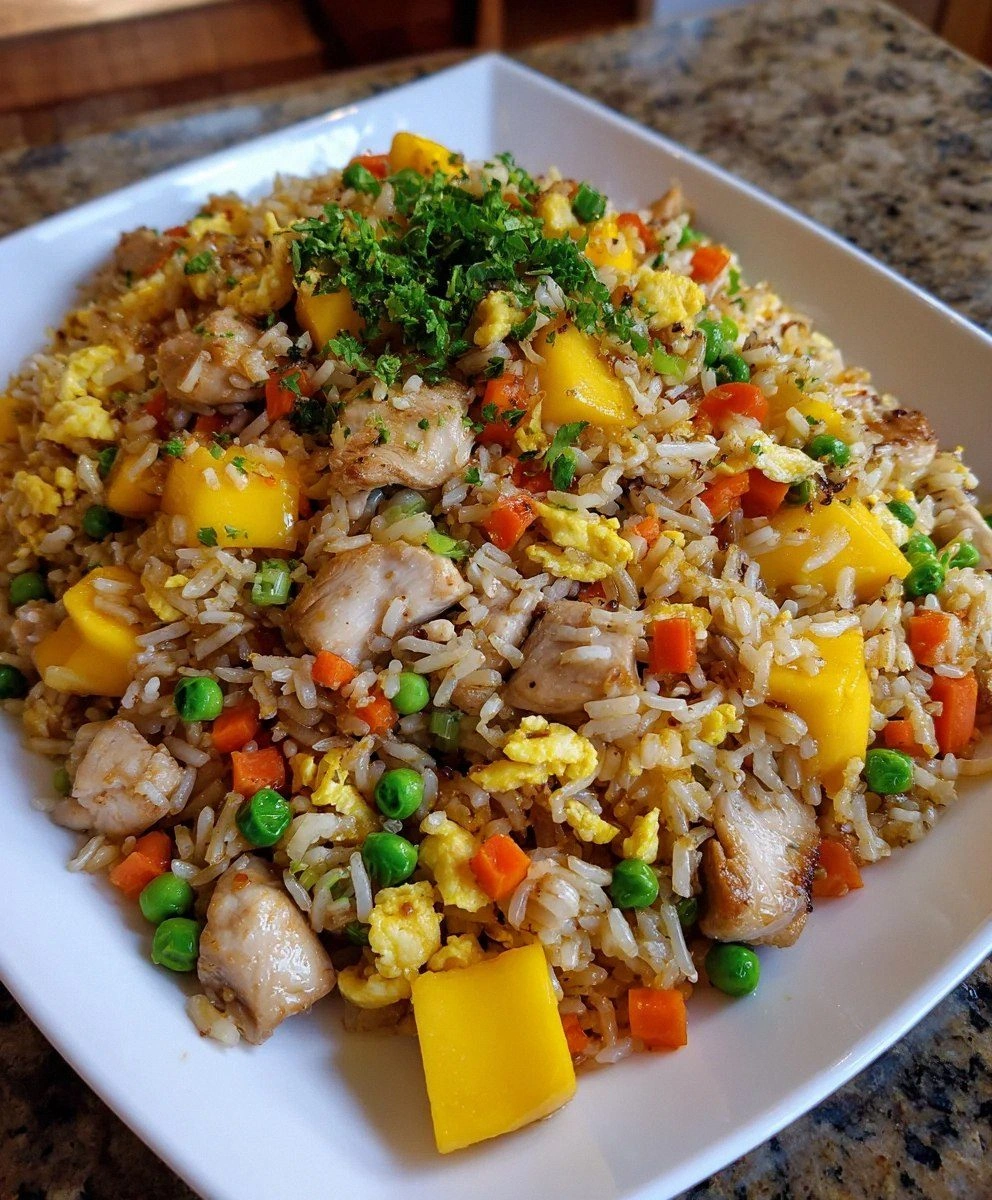
Picture this: It's 11:47 p.m. on a Tuesday, I'm standing in my kitchen wearing mismatched socks, and I'm staring at a takeout container of sad, gummy fried rice that tastes like disappointment and regret. You know the kind — those rock-hard carrot cubes, the microscopic chicken pieces that could qualify as a Where's Waldo challenge, and that weird metallic aftertaste that makes you question your life choices. In that moment of culinary despair, I made a vow that would change my weeknight dinner game forever: I would create the fried rice that would make all other fried rice hang their heads in shame. Friends, after seventeen attempts, three smoke detector incidents, and one very unfortunate mango explosion in the blender, I present to you the holy grail — Mango Chicken Fried Rice that will make your taste buds do a standing ovation.
Now, I know what you're thinking. Mango in fried rice? Has she finally lost it? But stay with me here, because this is where the magic happens. We're talking about those perfect cubes of sunshine-sweet mango that burst in your mouth like edible confetti, dancing with savory soy-kissed chicken and those crispy rice bits that crackle between your teeth. The first time I served this to my perpetually unimpressed teenage nephew, he actually paused mid-bite — a phenomenon I hadn't witnessed since he discovered video games — and whispered, "Aunt Sarah, this is illegal good." That moment alone was worth the mountain of dishes I'd created during my recipe testing marathon.
What makes this version different from every other fried rice recipe cluttering the internet? We're going to build layers of flavor like we're constructing the Empire State Building of weeknight dinners. First, we marinate the chicken in a soy-brown sugar bath that would make a teriyaki sauce weep with envy. Then we're going to achieve that coveted wok hei — the breath of the wok — using a simple skillet hack that will give you those slightly charred, smoky edges that make restaurant fried rice so addictive. And the mango? We're adding it at the perfect moment so it warms through but doesn't turn into mush, maintaining that glorious contrast between the soft, fragrant grains and those jewel-like tropical bombs of sweetness.
Listen, I've made every mistake possible so you don't have to. I've used fresh rice (disaster), forgotten the sesame oil (tragedy), and added the mango too early (mango soup, anyone?). But through these delicious failures, I've discovered the secrets that transform humble leftovers into a dish that tastes like a beach vacation met a comfort food convention and decided to throw a party in your mouth. By the end of this post, you'll be wielding your spatula with the confidence of a teppanyaki chef and creating fried rice so good, you'll find yourself making extra rice just to have an excuse to whip this up. Let me walk you through every single step — by the end, you'll wonder how you ever made it any other way.
What Makes This Version Stand Out
Flavor Bomb: The marriage of sweet mango and savory soy creates a taste profile that hits every corner of your palate — umami, sweet, salty, and that mysterious fifth taste that makes you close your eyes involuntarily. Most recipes play it safe with one-note flavors, but we're conducting a full symphony orchestra in your mouth.
Texture Paradise: We're achieving the impossible — fluffy rice grains that still have individual character, chicken so tender it practically melts, and mango cubes that pop like caviar. While other fried rice turns into a homogeneous mush, each bite here is a new adventure in texture contrasts.
Weeknight Warrior: From fridge to fork in 45 minutes flat, using ingredients you probably already have lurking in your kitchen. While your neighbors are waiting for takeout delivery, you're plating up something that makes delivery taste like cardboard.
Leftover Legend: This recipe was born from my hatred of wasting food and my love of sleeping in. Cold rice from yesterday's dinner? Perfect. That half-mango getting sad in the fridge? Star ingredient. We're basically kitchen superheroes rescuing food from the compost bin.
Crowd Shock: I've served this to picky toddlers, skeptical food snobs, and that one friend who claims to hate fruit in savory dishes. The empty plates speak louder than words — this is the dish that converts non-believers faster than a cult, but with tastier results.
Technique Triumph: We're using a method that gives you restaurant-level wok hei without owning a wok, commercial stove, or the upper body strength of a line cook. The secret lies in letting your pan get screaming hot and working in batches — patience that pays off in flavor dividends.
Make-Ahead Magic: Prep the components on Sunday, and you've got the building blocks for three different meals throughout the week. The marinated chicken keeps beautifully, and the mango holds up better than you'd expect. Future you is already thanking present you for this gift.
Alright, let's break down exactly what goes into this masterpiece...
Inside the Ingredient List
The Flavor Foundation
Soy sauce isn't just soy sauce in this recipe — it's the umami backbone that ties everything together like a delicious conspiracy. I'm talking about the good stuff, not the watery impostor that's been sitting in your pantry since the Obama administration. The saltiness penetrates the chicken during its brief marinade, creating depth that makes every bite taste like it's been slow-cooking for hours. If you absolutely must substitute, tamari works, but please promise me you'll never use that low-sodium sadness that tastes like soy sauce's anemic cousin. The brown sugar in our marinade isn't just there for sweetness — it's creating a gorgeous caramelization on the chicken that gives you those little crispy edges that make you close your eyes and sigh.
Water might seem like a boring addition, but it's the secret handshake that helps our marinade penetrate the chicken evenly. Without it, you're just coating the surface with flavor instead of infusing every fiber with that sweet-salty magic. Think of water as the uber driver for your taste molecules, delivering them deep into chicken territory where they can set up permanent residence.
The Texture Crew
Chicken breast or thighs both work here, but let me confess something — I'm team thigh all the way. Thighs forgive your overcooking sins, staying juicy even when you get distracted by that Instagram notification. Cut them into bite-sized pieces that are substantial enough to feel like you're eating real food, not chicken confetti. The marinade transforms these humble chunks into flavor sponges that burst with juice when you bite through that caramelized exterior. If you're using breast meat, don't skip the resting time — it needs every second to reabsorb its juices after the high-heat sear.
Onion is your aromatic foundation, but here's where most recipes go wrong — they add it too early and it turns into sad, translucent strings. We're adding it at just the right moment so it maintains a slight bite, providing little pops of sharpness that cut through the richness. Dice it small enough to disappear into the rice but large enough to provide textural interest, like edible punctuation marks throughout the dish.
Carrots bring more than just color — they're little sugar bombs that caramelize beautifully and provide that satisfying crunch that makes you feel like you're eating something healthy. Dice them small and uniform so they cook quickly and integrate seamlessly into the rice. Pro tip: if your carrots are older than your phone contract, peel them first — the peel can turn bitter faster than a reality TV star.
The Unexpected Star
Eight cloves of garlic might sound like overkill, but hear me out — we're not making vampire repellent here, we're building flavor skyscrapers. The garlic mellows and sweetens as it cooks, becoming these little nuggets of savory candy that make you wonder why you ever settled for one clove. Mince it fine so it distributes evenly, because nobody wants to bite into a raw garlic landmine. If you're a true garlic devotee like me, keep some raw garlic on the side to sprinkle on top — but that's advanced level stuff that might scare your dinner guests.
Frozen peas are the unsung heroes of fried rice — they add sweetness, color, and those satisfying pops that make eating fun. Don't even think about using canned peas unless you want your rice to taste like the school cafeteria's greatest hits. Keep them frozen until the last possible moment; they'll thaw instantly in the hot rice and maintain their vibrant color. These little green gems are like nature's candy, providing bursts of freshness that prevent the whole dish from becoming a heavy, starchy slog.
The Final Flourish
Cooked rice is where most home cooks go tragically wrong. Freshly cooked rice is too wet and will turn your fried rice into a mushy disaster that resembles rice pudding's evil twin. We're talking about day-old rice that's been sitting in your fridge, firm and separate, ready to absorb all the flavors like a sponge at a flavor party. Break up the clumps with your fingers before cooking — this isn't the time for lazy cooking shortcuts. If you only have fresh rice, spread it on a baking sheet and stick it in the freezer for 30 minutes — not as good as day-old, but it'll save dinner.
Unsalted butter might seem odd in an Asian-inspired dish, but it's the secret weapon that gives you that rich, restaurant-quality mouthfeel. Butter carries flavors like a VIP escort, helping the garlic, onion, and carrot release their aromatics while preventing them from burning. The milk solids in butter brown beautifully, adding nutty complexity that oil alone can't achieve. Just a tablespoon transforms this from good home cooking to restaurant-level deliciousness.
Everything's prepped? Good. Let's get into the real action...
The Method — Step by Step
- Whisk together the soy sauce, water, and brown sugar until the sugar dissolves completely and the mixture looks like liquid caramel. This isn't just mixing — you're creating the flavor foundation that will make your chicken taste like it's been marinating for days. The brown sugar should dissolve fully, leaving no gritty surprises in your final dish. If you're impatient like me, you can microwave this mixture for 15 seconds to help the sugar along, but don't let it boil or you'll lose the bright, fresh flavors. Once smooth, add your chicken pieces and stir to ensure every cube gets coated in this sweet-salty magic. Cover and let it hang out while you prep everything else — even 15 minutes makes a difference, but if you can give it 30, you're winning at life.
- Heat your largest skillet or wok over medium-high heat until a drop of water sizzles violently and evaporates within seconds. This is crucial — if your pan isn't hot enough, you'll steam your chicken instead of searing it, and we'll end up with rubbery disappointment instead of golden perfection. Add the olive oil and swirl to coat the pan — it should shimmer like a mirage but not smoke. If it starts smoking, remove from heat for 30 seconds and start again. Nobody wants to set off the smoke detector at 7 p.m. on a Tuesday. The oil should move like water, indicating your pan is ready for action.
- Add the marinated chicken to the screaming hot pan, but resist the urge to crowd the pan or stir constantly. Let the chicken sit undisturbed for 2-3 minutes — this is where the magic happens. The sugars in the marinade will caramelize, creating those gorgeous golden-brown edges that make you look like a professional chef. When the edges turn opaque and the bottoms are golden, flip the pieces and cook another 2 minutes. The chicken should feel firm but still have a tiny bit of give — overcook it now and it'll turn into sawdust by the end. Remove the chicken to a plate — yes, even if it's not quite done — because it'll finish cooking when we add it back later.
- Lower the heat to medium and add the butter to the same pan — yes, we're building flavor on top of flavor here. The butter will foam and pick up all those gorgeous browned bits from the chicken, creating a nutty, savory base that makes vegetables taste like they went to finishing school. When the foaming subsides, add your diced onions and carrots with a pinch of salt. The salt helps draw out moisture, preventing the vegetables from burning while they soften. Cook for 3-4 minutes, stirring occasionally, until the onions turn translucent at the edges but still maintain their shape. The carrots should brighten in color and start to soften — they'll finish cooking with the rice.
- Clear a space in the center of the pan and add your minced garlic like you're creating a tiny garlic island. Let it sizzle for 30 seconds without stirring — this prevents it from turning bitter and allows it to release its aromatics properly. When you can smell garlic perfume filling your kitchen (the best smell in the world), mix everything together. The garlic should turn golden but not brown — brown garlic tastes like disappointment and regret. If your garlic starts browning too quickly, add a splash of water to cool the pan down.
- Crank the heat back up to high and add your cold rice, breaking up any large clumps with your spatula. Here's where technique matters — don't just stir randomly. Press the rice against the hot pan, let it sit for 30 seconds, then flip and repeat. This creates those coveted crispy bits that make fried rice addictive. The rice should start making popping sounds like tiny firecrackers — that's the sound of perfection happening. Keep moving and pressing for about 3 minutes until every grain is separated and some pieces have golden edges.
- Create a well in the center of the rice and add your beaten eggs directly to the hot pan. Let them sit for 15 seconds without stirring — this prevents them from disappearing into the rice and turning everything into a weird egg-coated mess. When the edges start to set, scramble them gently within the well, then fold the rice over them. The eggs should form soft curds that distribute throughout the rice like little pockets of richness. If you see dry, rubbery egg pieces, you've overcooked them — better luck next time.
- Add the frozen peas and cooked chicken back to the pan, along with any juices that collected on the plate. These juices are concentrated flavor bombs that would make a French chef weep with joy. Toss everything together for 2 minutes, allowing the peas to thaw and warm through while the chicken finishes cooking. The peas should stay vibrant green and pop when you bite them — mushy peas are a crime against fried rice humanity. Everything should be steaming hot and fragrant, making it nearly impossible not to sneak a taste.
- Drizzle the toasted sesame oil around the edge of the pan — never directly on top — and add a few cracks of black pepper. The sesame oil should hit the hot pan and immediately release its nutty perfume, signaling that you're in the home stretch. Toss everything together for 30 seconds to distribute the oil evenly — think of it as the final seasoning that ties everything together. The black pepper adds a subtle heat that makes all the other flavors sing in harmony.
- Remove the pan from heat and immediately fold in your cold mango cubes. The residual heat will warm them slightly without turning them into mush, maintaining that gorgeous contrast between hot rice and cool, sweet mango. Work quickly but gently — you want to distribute the mango without crushing it into mango soup. Serve immediately in warmed bowls, because cold fried rice is a tragedy that Shakespeare should have written about. The mango should still hold its shape but be warm enough to release its tropical perfume when you dig in.
That's it — you did it. But hold on, I've got a few more tricks that'll take this to another level...
Insider Tricks for Flawless Results
The Temperature Rule Nobody Follows
Here's the thing that separates restaurant-quality fried rice from sad, homemade mush — temperature control is everything, and I mean everything. Your ingredients need to be at opposite ends of the temperature spectrum: fridge-cold rice meeting screaming-hot pan creates steam that separates grains instead of gluing them together. Cold mango hitting hot rice creates that temperature contrast that makes each bite exciting instead of a monotonous warm blob. Even your eggs should be cold — they set faster and create those tender curds instead of rubbery scrambled eggs that could bounce off the walls.
But here's the part most people miss — your serving bowls matter too. Warm bowls keep everything at the perfect eating temperature, while cold bowls suck the heat out faster than a teenager drains your wallet. I keep my serving bowls in a low oven (200°F) while cooking, but if that's too much commitment, a quick 30-second microwave session works too. This isn't just food snobbery — lukewarm fried rice develops weird textures and muted flavors that make all your hard work taste mediocre. Trust me, I learned this the hard way when I served lukewarm fried rice to my mother-in-law and watched her push it around her plate like it was a science experiment.
Why Your Nose Knows Best
Your nose is the most underutilized kitchen tool you own, and it's about to become your best friend. When the garlic hits the pan, you should smell it within 15 seconds — if you don't, your pan isn't hot enough and you're just warming garlic in oil like some kind of amateur. The sesame oil should hit your nose immediately when it touches the hot pan, creating an almost involuntary mouth-watering response. If you're not fighting the urge to face-plant into the pan, something's wrong and you need to start over.
The mango test happens at the very end — you should smell tropical sweetness the moment you fold in those cubes, but it shouldn't be overwhelming. If the mango perfume punches you in the face, you added it too early and it's overcooking. The scent should be subtle, like someone eating mango three rooms away, teasing you with what's to come. This might sound pretentious, but once you start cooking with your nose, you'll wonder how you ever managed without it. My neighbor once knocked on my door because she could smell this fried rice from her kitchen and needed to know what culinary wizardry was happening.
The 5-Minute Rest That Changes Everything
I know, I know — when dinner's ready, you want to eat immediately. But here's where patience pays off in spades. Let your finished fried rice rest for exactly 5 minutes off heat before serving. This isn't just restaurant nonsense — it's science in action. The rice grains absorb the flavors more evenly, the mango warms to the perfect temperature, and everything melds together without becoming mushy. Those five minutes are when the magic happens, like letting a fine wine breathe or allowing a steak to rest.
During this sacred five minutes, cover the pan with a lid or plate — not to keep it hot, but to trap just enough steam to finish cooking everything gently. The residual heat continues working its magic while the temperature drops to that perfect eating zone. Use this time to set the table, pour yourself a drink, or just bask in the glory of what you've created. I usually spend these five minutes dancing around my kitchen to terrible 80s music, which might not improve the fried rice but definitely improves my mood.
Creative Twists and Variations
This recipe is a playground. Here are some of my favorite ways to switch things up:
Spicy Thai Sunset
Add a tablespoon of Thai red curry paste to the marinade and swap the brown sugar for palm sugar. Throw in some thinly sliced Thai chilies with the garlic, and finish with Thai basil instead of sesame oil. The result is a fiery, fragrant version that makes your lips tingle in the best possible way. My spice-loving friend calls this version "sunshine with a kick," and she requests it every time she comes over, which is honestly getting a little expensive because Thai basil isn't cheap.
Tropical Paradise
Double down on the tropical theme by adding diced pineapple along with the mango, and swap the sesame oil for coconut oil. Add some unsweetened coconut flakes with the peas for texture, and finish with lime zest instead of black pepper. This version tastes like a beach vacation in bowl form — I make it every January when winter depression starts setting in and I need edible sunshine. The combination of pineapple and mango might sound like overkill, but the acidity of the pineapple actually balances the sweetness perfectly.
Korean Fusion Fire
Replace half the soy sauce with gochujang (Korean chili paste) and add a teaspoon of grated ginger to the marinade. Use Korean pear instead of mango, and finish with sesame seeds and sliced scallions. The gochujang gives you that addictive sweet-spicy flavor that Korean food does so well, while the Korean pear provides a crisp, sweet contrast that makes the whole dish sing. My Korean neighbor tried this version and actually approved, which is the highest compliment I've ever received.
Mediterranean Sunset
Swap the soy sauce for a mixture of fish sauce and lime juice, use dried apricots instead of mango, and add some crumbled feta at the very end. The salty feta against the sweet apricots creates this insane flavor contrast that shouldn't work but absolutely does. Finish with fresh mint instead of sesame oil, and you've got a Mediterranean-Asian fusion that sounds weird but tastes like it was always meant to be. This version is surprisingly refreshing and perfect for hot summer evenings when heavy food feels oppressive.
Breakfast Fried Rice
Add some diced ham or bacon with the chicken, throw in some diced red bell pepper for color, and top each serving with a fried egg. The runny yolk creates this incredible sauce that coats everything in rich, golden deliciousness. I make this version on weekends when I want breakfast for dinner but need something more substantial than pancakes. The sweet mango against the salty ham and rich egg yolk is the kind of combination that makes you wonder why all breakfasts don't include tropical fruit.
Seafood Supreme
Replace the chicken with shrimp (add them in the last 2 minutes of cooking so they don't turn rubbery) and add some diced red bell pepper for color. The sweetness of the shrimp pairs beautifully with the mango, creating a surf-and-turf vibe without the turf. Use coconut oil instead of olive oil for a more tropical flavor, and finish with fresh cilantro instead of sesame oil. This version tastes like a beachside restaurant in Thailand, minus the overpriced drinks and sand in your shoes.
Storing and Bringing It Back to Life
Fridge Storage
Store leftovers in an airtight container with a paper towel on top to absorb excess moisture — nobody likes soggy fried rice, and the mango can release water as it sits. It'll keep for up to 3 days in the fridge, though honestly, it's never lasted more than 24 hours in my house because people keep sneaking spoonfuls straight from the container. Press plastic wrap directly onto the surface before sealing the container — this prevents the rice from drying out and the mango from oxidizing. The flavors actually improve overnight as everything melds together, making leftovers sometimes better than the fresh version.
When storing, separate the rice into shallow containers rather than one deep container — it cools faster and prevents bacteria growth in the temperature danger zone. Label your containers with masking tape and a marker, because "mystery rice" in the fridge never gets eaten and you'll find yourself ordering pizza instead of enjoying your delicious leftovers. If you know you'll be storing some, slightly undercook the mango so it doesn't turn to complete mush during reheating.
Freezer Friendly
This fried rice freezes beautifully, but here's the key — freeze it without the mango and add fresh mango when reheating. Portion it into freezer bags, press out all the air, and freeze flat so you can stack them like delicious rice pancakes. It'll keep for up to 2 months, though let's be honest — if you haven't eaten it within 2 weeks, you're doing life wrong. Thaw overnight in the fridge or use the defrost setting on your microwave, then proceed with reheating.
For emergency fried rice situations (we've all been there), you can microwave straight from frozen. Add a tablespoon of water, cover with a damp paper towel, and microwave in 1-minute intervals, stirring between each. It's not quite as good as fresh, but it's infinitely better than another night of sad desk lunch or expensive takeout. I keep a few portions frozen for those nights when cooking feels as impossible as climbing Everest in flip-flops.
Best Reheating Method
The microwave works in a pinch, but for best results, reheat in a hot skillet with a tiny bit of oil. Add the cold rice and let it sit undisturbed for a minute to recreate those crispy bits that make fried rice addictive. Add a splash of water and cover for 30 seconds to create steam that revives the rice without drying it out. For frozen portions, add the mango cubes while reheating — they'll thaw perfectly and maintain their shape instead of turning into mango mush.
If you must use the microwave (no judgment, we've all been there), add a tablespoon of water and cover with a damp paper towel. Microwave on 70% power in 45-second intervals, stirring between each. The lower power prevents the rice from turning into tiny hockey pucks, and the steam from the paper towel keeps everything moist. Finish with a fresh drizzle of sesame oil to wake up the flavors — it's like hitting the refresh button on your leftovers.