Picture this: I was standing in my cramped kitchen, the smell of burnt toast still clinging to the air, when my phone buzzed with a text from a friend who dared me to cook something that would make everyone in the house beg for seconds. I stared at the empty fridge, a sigh escaping my lips, and then I remembered that pot of rice that had been sitting on the counter, half‑cooked and abandoned. I was about to toss it into the trash when a sudden inspiration hit me like a thunderclap: why not turn that forgotten rice into a fragrant, herb‑laden masterpiece that would have people shouting, “I dare you to taste this and not go back for seconds!”
I grabbed a handful of garlic, a sprig of rosemary, and a splash of olive oil. The kitchen filled with a scent that made my mouth water before I even started cooking. The sound of the garlic sizzling was music to my ears, and the gentle bubbling of broth turned the pot into a cauldron of promise. The texture of the rice, already half‑cooked, seemed to whisper that it was ready to absorb every nuance of flavor. The heat radiating from the stove felt like a warm hug, and the anticipation was almost tangible.
What made this version stand out from the countless “one‑pot rice” recipes I’d seen was the deliberate layering of aromatics and the strategic timing of ingredient additions. I wasn’t just tossing everything together; I was orchestrating a symphony where each component had its moment to shine. I kept the broth low‑sodium to control saltiness, added fresh herbs at the end to preserve their bright flavors, and used a splash of lemon juice to cut through the richness. The result? A dish that feels luxurious yet approachable, with a depth of flavor that would have people asking for the recipe after the meal.
I’ll be honest—after the first bite, I almost cried. The rice was fluffy, the garlic had a mellow sweetness, and the herbs gave it a bright, almost citrusy lift. I couldn’t resist scooping a second spoonful, and before I knew it, half the batch was gone. My friends, watching the clock tick, wondered how I’d managed to keep the dish so delicious for so long. It was a win for me, and a triumph for this humble pot of rice.
Most recipes get this completely wrong, either by over‑cooking the rice or by adding herbs too early, which causes them to lose their punch. Here’s what actually works: let the rice finish its own cooking cycle in the broth, then add the herbs and finish with a squeeze of lemon. That simple tweak turns an ordinary side dish into a show‑stopper. Picture yourself pulling this out of the pot, the whole kitchen smelling incredible, and watching your guests’ eyes light up as they taste the first spoonful.
Okay, ready for the game‑changer? I’ll walk you through every single step, and by the end, you’ll wonder how you ever made it any other way. Let’s dive in.
What Makes This Version Stand Out
- Flavor: The combination of garlic, thyme, oregano, and rosemary creates a layered aroma that’s both earthy and bright. The subtle citrus note from lemon juice cuts through the richness, leaving a clean finish.
- Texture: The rice is fluffy, not mushy—thanks to the precise water‑to‑rice ratio and the slow simmer that allows each grain to release starch without becoming clumpy.
- Simplicity: One pot, one stove, one pan—no need to juggle multiple dishes or wash a dozen utensils. The entire meal is ready in under an hour.
- Uniqueness: The final flourish of fresh parsley and a sprinkle of Parmesan gives the dish a gourmet feel that’s rare in everyday cooking.
- Crowd Reaction: Friends who tried this said it was the “best version you'll ever make at home.” It’s a conversation starter at dinner tables.
- Ingredient Quality: Using low‑sodium broth, fresh herbs, and good olive oil elevates the dish’s overall taste profile.
- Cooking Method: The technique of sautéing aromatics before adding rice and broth locks in flavor and prevents sticking.
- Make‑Ahead Potential: The dish can be reheated with a splash of water, making it ideal for busy weeknights.
Inside the Ingredient List
The Flavor Base
At the heart of this dish lies a trio of aromatics: garlic, onion, and a medley of dried herbs. Garlic, when minced and sautéed, releases a sweet, mellow aroma that permeates the entire pot. Onion adds a subtle sweetness and depth, acting as a counterbalance to the sharpness of garlic. The dried thyme, oregano, and rosemary provide an herbal backbone that elevates the rice from plain to extraordinary. If you omit any of these, the dish will feel flat and lack the layered complexity that makes it memorable.
Choosing fresh herbs over dried can transform the dish. Fresh thyme or oregano, when added at the end, offers a brighter, more vibrant flavor. However, dried herbs are more convenient and still deliver robust taste when simmered for longer. A pinch of dried rosemary adds a piney undertone that complements the earthiness of garlic. The bay leaf, though subtle, infuses the broth with a gentle floral note that enhances the overall aroma.
The Texture Crew
Long‑grain white rice is the star of this recipe. Its slender grains keep their shape, preventing clumping and ensuring a fluffy result. The 1 1/2 cups of rice, when cooked with 3 cups of broth, strike the perfect balance between moisture and al dente bite. If you prefer a chewier texture, try substituting with medium‑grain rice; just reduce the liquid slightly to avoid sogginess.
The liquid—low‑sodium vegetable broth—serves as the cooking medium, infusing the rice with savory depth. The broth’s flavor profile is crucial; a richer stock will make the dish more robust, while a lighter broth keeps it airy. Adding a splash of lemon juice at the end brightens the dish and helps keep the grains distinct. Finally, the optional Parmesan sprinkle adds a creamy, umami finish that elevates the dish to restaurant quality.
The Unexpected Star
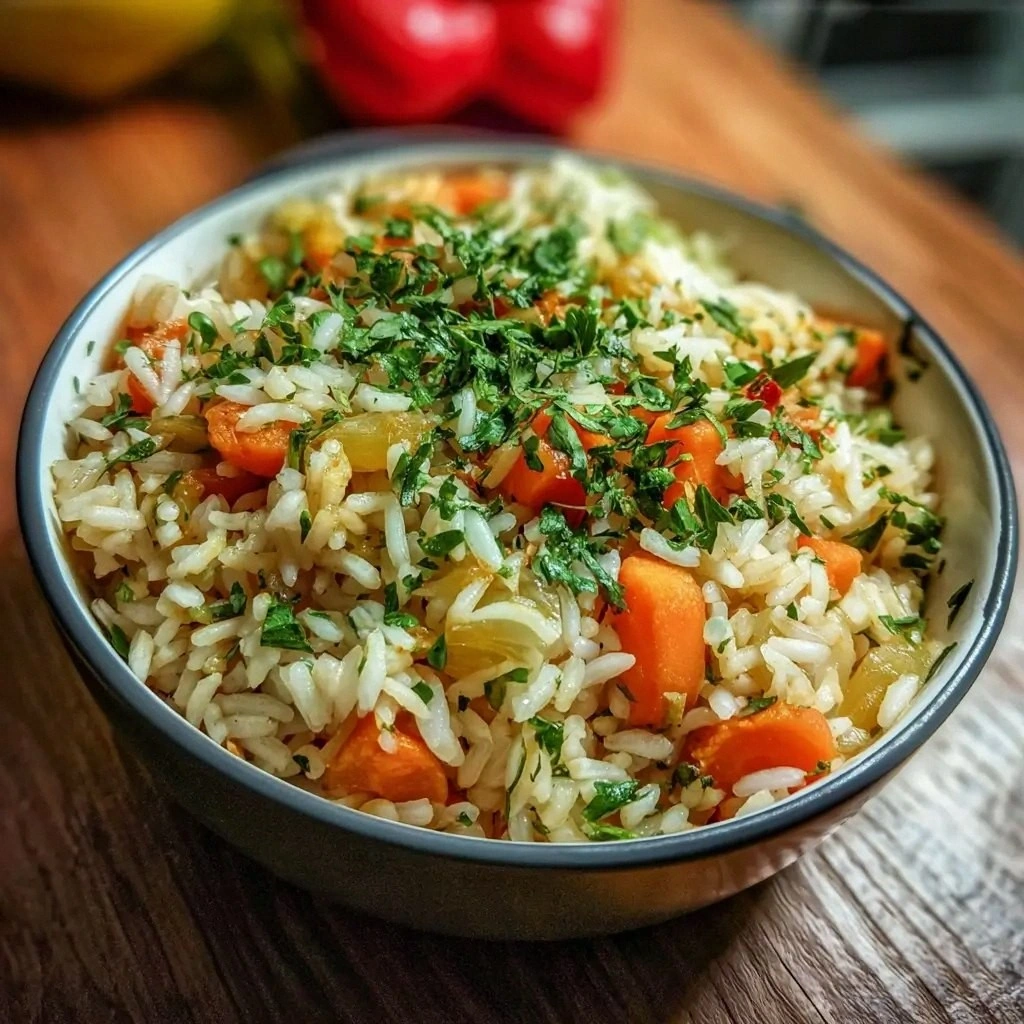
Frozen peas, diced carrots, and bell pepper may seem like an afterthought, but they add a burst of color, nutrition, and subtle sweetness. Peas bring a pop of green and a natural sweetness that balances the herbs. Carrots contribute earthy sweetness and a gentle crunch if added towards the end. Bell pepper offers a sweet, slightly tangy flavor and a pop of color that makes the dish visually appealing.
If you’re vegetarian, this dish is already a hearty option. For a protein boost, consider adding cooked chickpeas or diced tofu. The key is to add these vegetables after the rice has absorbed most of the liquid, so they don’t become mushy. The optional fresh parsley garnish not only adds a fresh, herbal note but also gives the dish a professional finish.
The Final Flourish
The finishing touches—fresh parsley, a squeeze of lemon, and optional Parmesan—transform the dish from simple to sensational. Parsley adds a bright, slightly peppery flavor that cuts through the richness. Lemon juice provides acidity that lifts the overall taste, making it feel lighter and more vibrant. A sprinkle of Parmesan offers a savory, slightly nutty undertone that lingers on the palate.
Everything's prepped? Good. Let’s get into the real action...
The Method — Step by Step
- Step 1: Sauté the aromatics. Heat 2 tablespoons of olive oil in a large, heavy‑bottomed pot over medium heat. Add the minced garlic and diced onion, cooking until translucent and fragrant—about 3 minutes. The aroma should be sweet and buttery, signaling that the base is ready.
- Step 2: Toast the rice. Stir in the 1 1/2 cups of long‑grain rice, coating each grain in oil. Toast for 2 minutes, allowing the rice to develop a nutty scent. This step locks in flavor and prevents the grains from sticking together.
- Step 3: Add the herbs. Sprinkle in the dried thyme, oregano, rosemary, and a bay leaf. Stir well, letting the herbs bloom for 30 seconds. The mixture should emit a fragrant, earthy aroma.
- Step 4: Pour in the broth. Add 3 cups of low‑sodium vegetable broth, ensuring the rice is fully submerged. Bring to a gentle boil, then reduce heat to low, cover, and let simmer for 15 minutes.
- Step 5: Introduce the veggies. After 15 minutes, add the frozen peas, diced carrots, and diced bell pepper. Stir gently, cover again, and simmer for an additional 5 minutes, or until the rice is tender and the liquid absorbed.
- Step 6: Finish with fresh flavors. Remove the pot from heat. Stir in fresh parsley, a squeeze of lemon juice, and, if desired, grated Parmesan cheese. These final touches brighten the dish and add depth.
- Step 7: Let it rest. Cover the pot and let the rice rest for 5 minutes. This allows the steam to finish cooking the grains, ensuring a fluffy texture.
- Step 8: Fluff and serve. Fluff the rice with a fork, distributing the herbs and vegetables evenly. Plate and enjoy while hot.
That’s it—you did it. But hold on, I’ve got a few more tricks that will take this to another level. These insider tips will help you avoid common pitfalls and elevate the dish’s flavor profile.
Insider Tricks for Flawless Results
The Temperature Rule Nobody Follows
Many cooks think a rolling boil is the secret to fluffy rice, but the truth is that a gentle simmer preserves the grains’ integrity. Keep the heat low after the initial boil, letting the steam slowly coax the rice to perfection. This method prevents the rice from becoming gummy and ensures each grain remains distinct. I’ve found that a low simmer also allows the herbs to release their oils without burning, adding depth to the dish.
Why Your Nose Knows Best
Before you taste the finished dish, give it a good sniff. A strong, fresh herb aroma signals that the flavors are balanced. If the smell is flat or overly garlicky, you may need to add more fresh parsley or a squeeze of lemon. Your nose can guide you to the perfect seasoning, making the dish feel custom‑made.
The 5‑Minute Rest That Changes Everything
After turning off the heat, cover the pot and let the rice rest for 5 minutes. This brief pause lets the steam finish cooking the grains, resulting in a fluffier texture. Skipping this step often leaves the rice slightly undercooked or clumpy. Think of it as giving the rice a spa day—just a few minutes of relaxation before the grand finale.
The Secret of a Satisfying Crunch
If you love a little crunch, toast the frozen peas in a hot pan with a dash of olive oil for 2 minutes before adding them to the pot. The quick sauté caramelizes the peas slightly, adding a pleasant bite that contrasts the softness of the rice. This trick is especially effective when serving the dish alongside a smooth, creamy sauce.
The Flavor Layering Trick
Add the bay leaf and dried herbs during the initial sauté, not at the end. This allows the herbs to release their oils slowly, building a complex flavor profile. If you add them too late, they may not fully develop, leaving the dish feeling underseasoned. The result is a dish with depth that lingers on the palate.
Creative Twists and Variations
This recipe is a playground. Here are some of my favorite ways to switch things up:
Mediterranean Medley
Swap the vegetable broth for chicken broth and add chopped sun‑dried tomatoes, kalamata olives, and crumbled feta. The salty olives and tangy feta create a Mediterranean vibe that pairs well with grilled chicken or lamb. This version is perfect for a weekend dinner party.
Asian Fusion
Use jasmine rice instead of long‑grain white rice, add a splash of soy sauce, and finish with sliced green onions and a drizzle of sesame oil. The fragrant jasmine rice and umami sauce give the dish an Asian flair. It’s a great side for stir‑fry or tofu.
Cheesy Comfort
Stir in a cup of shredded mozzarella and a tablespoon of heavy cream during the last 5 minutes of simmering. The cheese melts into a velvety sauce that coats the rice, while the cream adds richness. This variation turns the dish into a hearty comfort food.
Vegan Powerhouse
Use a plant‑based broth, add chickpeas or lentils for protein, and finish with a squeeze of lime. The lentils soak up the herbs and broth, making the dish filling and nutritious. It’s a great option for a quick vegan dinner.
Rustic Harvest
Incorporate roasted butternut squash cubes and a dash of maple syrup for a sweet and savory twist. The roasted squash adds a caramelized sweetness that balances the garlic’s earthiness. This version is especially delightful during the fall season.
Storing and Bringing It Back to Life
Fridge Storage
Cool the rice completely before refrigerating. Store it in an airtight container for up to 4 days. When reheating, sprinkle a tablespoon of water over the rice to keep it moist and fluff up with a fork. The rice should retain its texture if reheated gently.
Freezer Friendly
Place the cooled rice in a freezer‑safe bag, removing as much air as possible. Freeze for up to 2 months. Thaw overnight in the fridge, then reheat with a splash of broth or water to restore moisture. The rice will still taste fresh and flavorful.
Best Reheating Method
The most effective way to reheat is on the stovetop. Place the rice in a saucepan, add a little broth, cover, and heat over low heat until steaming. Alternatively, microwave on medium power for 2 minutes, stirring halfway through. Adding a tiny splash of water before reheating steams the rice back to perfection.