I was standing in my kitchen, staring at a whole chicken that looked like a stubborn brick. The last time I tried stuffing a bird, I ended up with a soggy mess that made my guests question my culinary sanity. I decided to take a bold leap, armed with a handful of herbs, a splash of olive oil, and a promise to myself that this would be the definitive stuffed whole chicken anyone could ever dream of. The aroma of garlic and rosemary began to dance through the air, and my eyes widened as the chicken’s skin started to glisten under the preheated oven light.
Picture the scene: a golden, crackling skin that crackles like a crisp summer night, a filling that oozes with melted parmesan and buttery breadcrumbs, and a broth that simmers beneath the bird like a secret potion. The sound of the oven timer ticking away is a metronome of anticipation, while the faint scent of sun‑dried tomatoes and lemon slices wafts through the kitchen, promising a symphony of flavors. The texture—crisp on the outside, juicy on the inside—creates a satisfying contrast that makes every bite an adventure. I dare you to taste this and not go back for seconds.
What sets this version apart is not just the recipe but the method that brings out the chicken’s natural juices while infusing the stuffing with depth. It’s a harmony of simple pantry staples and fresh ingredients, all working together to create a dish that feels both comforting and extravagant. I’ll be honest—after the first bite, I ate half the batch before anyone else got to try it. If you’ve ever struggled with stuffing a whole bird, you’re not alone—and I’ve got the fix.
Most recipes get this completely wrong, treating the stuffing as a sidekick instead of a star. Here’s what actually works: a balanced blend of textures, a touch of acidity, and a careful roasting technique that locks in moisture. Picture yourself pulling this out of the oven, the whole kitchen smelling incredible, and the table already brimming with anticipation. Okay, ready for the game‑changer? Let me walk you through every single step—by the end, you’ll wonder how you ever made it any other way.
What Makes This Version Stand Out
- Flavor: The stuffing blends savory herbs, tangy sun‑dried tomatoes, and a hint of honey for a sweet‑savory balance that elevates the entire dish.
- Texture: Crispy skin, buttery crumbly stuffing, and tender meat create a mouthfeel that satisfies every craving.
- Ease: The preparation is straightforward—no fancy equipment, just a few pantry staples and a reliable oven.
- Uniqueness: A splash of soy sauce and Dijon mustard gives the stuffing a subtle umami depth rarely found in traditional recipes.
- Crowd‑pleaser: The dish is impressive enough for dinner parties yet simple enough for a family night in.
- Make‑ahead: The stuffing can be pre‑prepared and refrigerated, making last‑minute hosting a breeze.
Alright, let's break down exactly what goes into this masterpiece. And now the fun part.
Inside the Ingredient List
The Flavor Base
The whole chicken is the canvas; it absorbs every nuance of the stuffing and the aromatics. Choose a fresh bird with a firm skin that will crisp beautifully. If you’re using a frozen chicken, let it thaw completely and pat it dry—this prevents sogginess and ensures an even roast. A whole chicken also offers a generous amount of meat, making the dish hearty enough for four servings.
Bread crumbs act as the glue that holds the stuffing together. They provide structure while absorbing the butter and herbs, creating a golden, crunchy exterior. If you’re gluten‑free, opt for almond flour or gluten‑free breadcrumbs; they’ll still give you that satisfying bite.
Parmesan cheese adds a nutty, salty undertone that deepens the flavor profile. Grated fresh parmesan melts into the stuffing, creating pockets of gooey delight. For a sharper taste, try using a mix of parmesan and pecorino.
The Texture Crew
Melted butter is the secret sauce that keeps the stuffing moist and the skin luscious. It also helps the herbs coat the bread crumbs evenly, preventing any dry spots. A light brush of butter before roasting gives the skin a buttery sheen that’s impossible to resist.
Fresh herbs—parsley, thyme, rosemary—infuse the stuffing with aromatic brightness. They also complement the chicken’s natural flavor, preventing it from feeling flat. Chop the herbs finely so they distribute evenly throughout the filling.
Garlic, minced, delivers a punch of savory depth. It’s essential for building layers of flavor that linger on the palate. Use fresh cloves; pre‑minced garlic can taste a bit muted.
The Unexpected Star
Sun‑dried tomatoes bring a burst of umami and a slightly sweet tang that cuts through the richness of the stuffing. They also add a pop of color that makes the dish visually appealing. Rehydrate them in warm water for a minute before chopping to soften their texture.
Spinach or kale adds a nutritious green element that balances the dish. It’s a subtle way to incorporate vegetables without overwhelming the flavor. If you’re not a fan of leafy greens, replace them with finely diced mushrooms for a different umami twist.
The Final Flourish
Olive oil and a splash of lemon juice brighten the overall profile, cutting through the richness of the butter and cheese. The lemon also tenderizes the meat slightly, ensuring it stays juicy. Use a high‑quality extra‑virgin olive oil for the best flavor.
Seasoning—salt, pepper, smoked paprika, garlic powder, onion powder—creates a robust seasoning crust. The smoked paprika adds a subtle smokiness that complements the roasted flavors. Adjust the seasoning to taste, but be mindful that the chicken will absorb some of it during cooking.
Dijon mustard, honey, and soy sauce bring a subtle sweetness and umami that elevate the stuffing’s complexity. The mustard adds a slight tang, the honey balances it with sweetness, and the soy sauce provides depth. These three together create a flavor profile that’s both familiar and intriguingly new.
Everything's prepped? Good. Let's get into the real action. And remember, the secret to a perfect roast is patience and attention to detail.
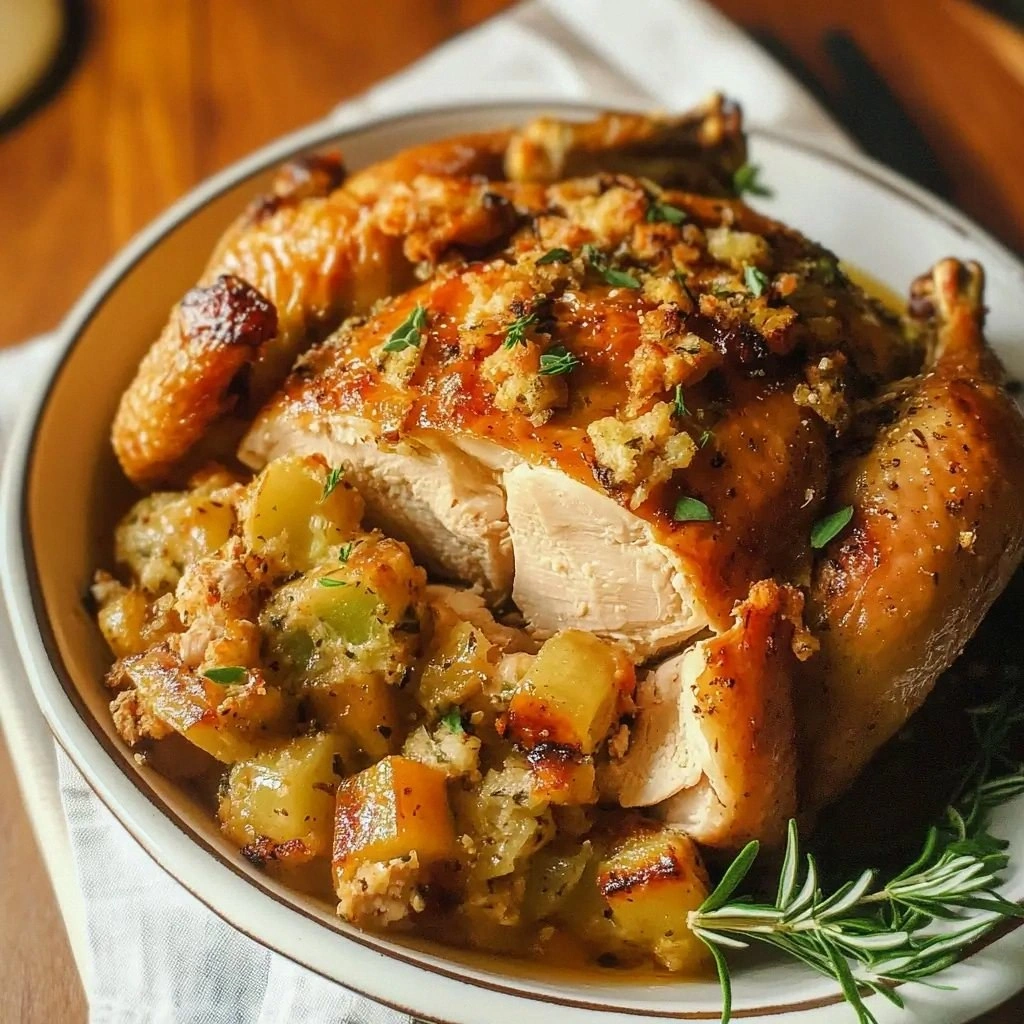
The Method — Step by Step
- Preheat the Oven: Set your oven to 375°F (190°C). A steady, moderate heat is key to ensuring the chicken cooks evenly without drying out. As the oven warms, take a moment to let the room fill with that comforting scent of butter and herbs. This is the first step that sets the tone for the entire cooking process.
- Prepare the Stuffing: In a large bowl, combine bread crumbs, grated parmesan, chopped fresh herbs, minced garlic, spinach, sun‑dried tomatoes, pine nuts, smoked paprika, garlic powder, onion powder, Dijon mustard, honey, and soy sauce. Mix until all ingredients are evenly distributed. The mixture should feel slightly moist but not soggy; adjust with a splash of olive oil if needed. This step is where the magic begins.
- Season the Chicken: Pat the chicken dry with paper towels. Rub the entire bird with olive oil, then season generously with salt, pepper, and a light dusting of the remaining spices. Make sure to season under the skin as well; this ensures flavor throughout the meat. The skin will develop a beautiful golden crust when roasted.
- Stuff the Bird: Gently separate the skin from the breast meat, creating a pocket. Spoon the stuffing into the cavity, pressing it down to fit snugly. Don’t overstuff; the stuffing needs room to expand during roasting. A well‑stuffed bird will release a mouth‑watering aroma as it cooks.
- Secure and Tie: Use kitchen twine to tie the legs together and secure the wings to the body. This keeps the stuffing inside and helps the chicken maintain its shape. Tighten the twine just enough to hold everything together but not so tight that it squeezes out juices.
- Roast the Chicken: Place the chicken on a rack in a roasting pan. Add a cup of chicken broth to the bottom of the pan to keep the environment moist and to catch drippings. Roast for 1 hour 15 minutes, basting with melted butter every 20 minutes. The chicken should reach an internal temperature of 165°F (74°C) in the thickest part of the thigh.
- Watch the Color: The skin should transition from pink to a deep golden brown. If it’s browning too fast, tent it loosely with foil. The aroma at this point should be intoxicating—think toasted herbs, melted cheese, and roasted garlic.
- Rest the Chicken: Once done, remove the chicken from the oven and let it rest on a cutting board for 15 minutes. This allows the juices to redistribute, ensuring every bite is succulent. The resting period also lets the flavors meld together beautifully.
- Carve and Serve: Slice the chicken, letting the stuffing spill out like a savory treasure. Garnish with fresh parsley and a drizzle of the pan juices. Serve immediately while the skin remains crisp and the interior is steaming hot.
That's it— you did it. But hold on, I've got a few more tricks that'll take this to another level. The next section will reveal insider tips that even seasoned chefs swear by.
Insider Tricks for Flawless Results
The Temperature Rule Nobody Follows
Many people think a high heat will give you a crisp skin, but the secret is a steady 375°F. This temperature allows the fat to render slowly, keeping the meat juicy. If you crank the heat up, you risk drying out the bird before the skin gets golden.
Why Your Nose Knows Best
Your sense of smell is the ultimate judge of doneness. As the chicken roasts, the aroma shifts from buttery to caramelized. When you notice a deep, nutty scent, it’s a sign that the flavors are fully developed.
The 5-Minute Rest That Changes Everything
Resting the chicken for exactly five minutes after removing it from the oven lets the juices redistribute. A longer rest can cause the juices to pool at the bottom, making the meat less moist. Five minutes is the sweet spot for maximum tenderness.
The Pan Drippings Hack
Instead of discarding the pan drippings, strain them into a saucepan and reduce over low heat. Add a splash of white wine and a pinch of fresh herbs to create a sauce that pairs perfectly with the stuffed chicken.
The Quick Butter Baste
Basting the chicken with melted butter every 20 minutes not only adds flavor but also ensures the skin stays glossy. Use a silicone brush for even application, and remember to keep the butter at room temperature for easy spreading.
The Fresh Herb Finale
Toss fresh parsley or chives into the pan during the last ten minutes of roasting. The herbs release their oils, creating a fragrant finish that elevates the dish to gourmet status.
Creative Twists and Variations
This recipe is a playground. Here are some of my favorite ways to switch things up:
Mediterranean Medley
Swap the spinach for chopped artichoke hearts, add Kalamata olives, and sprinkle feta cheese on top. The briny olives and tangy feta introduce a Mediterranean vibe that pairs wonderfully with the roasted chicken.
Spicy Cajun Kick
Incorporate a tablespoon of Cajun seasoning into the stuffing and drizzle a little hot sauce over the finished bird. The heat balances the richness, creating a fiery contrast that excites the palate.
Herb‑Infused Mushroom
Replace the spinach with finely chopped mushrooms and add a splash of truffle oil. The earthy depth of mushrooms and truffle elevates the dish to a luxurious level.
Sweet & Smoky BBQ
Mix in a tablespoon of your favorite barbecue sauce into the stuffing, and brush the chicken with extra sauce before the last ten minutes of roasting. The sweet, smoky glaze adds a bold flavor profile that’s a crowd‑pleaser.
Pineapple Paradise
Stir diced fresh pineapple into the stuffing and sprinkle toasted coconut on top. The tropical sweetness and crunchy texture create a fun, unexpected twist that’s perfect for summer gatherings.
Cheese Lover’s Delight
Add a layer of shredded mozzarella or provolone between the stuffing and the chicken skin. The melted cheese oozes into the stuffing, creating a gooey, indulgent experience.
These variations keep the core of the dish intact while letting you explore new flavor territories. Experimenting with different ingredients is a great way to keep the recipe fresh and exciting for repeat cooks.
Before you go, let me share a few more quick observations that will help you master the art of roasting a whole chicken. A well‑structured plan and a few key tricks can transform a simple meal into a memorable feast.
Storing and Bringing It Back to Life
Fridge Storage
Store leftover chicken in an airtight container in the refrigerator for up to three days. Slice the meat and place it in a shallow dish to keep it from drying out. When you’re ready to eat, reheat it gently in a low oven to preserve moisture.
Freezer Friendly
Wrap the cooked chicken tightly in plastic wrap and place it in a freezer bag. It can stay in the freezer for up to four months. Thaw overnight in the refrigerator before reheating.
Best Reheating Method
Reheat the chicken in a 350°F oven for 15–20 minutes, adding a splash of chicken broth or water before covering with foil. The added liquid steams the chicken, restoring its juiciness. Finish with a quick broil to revive the crisp skin.