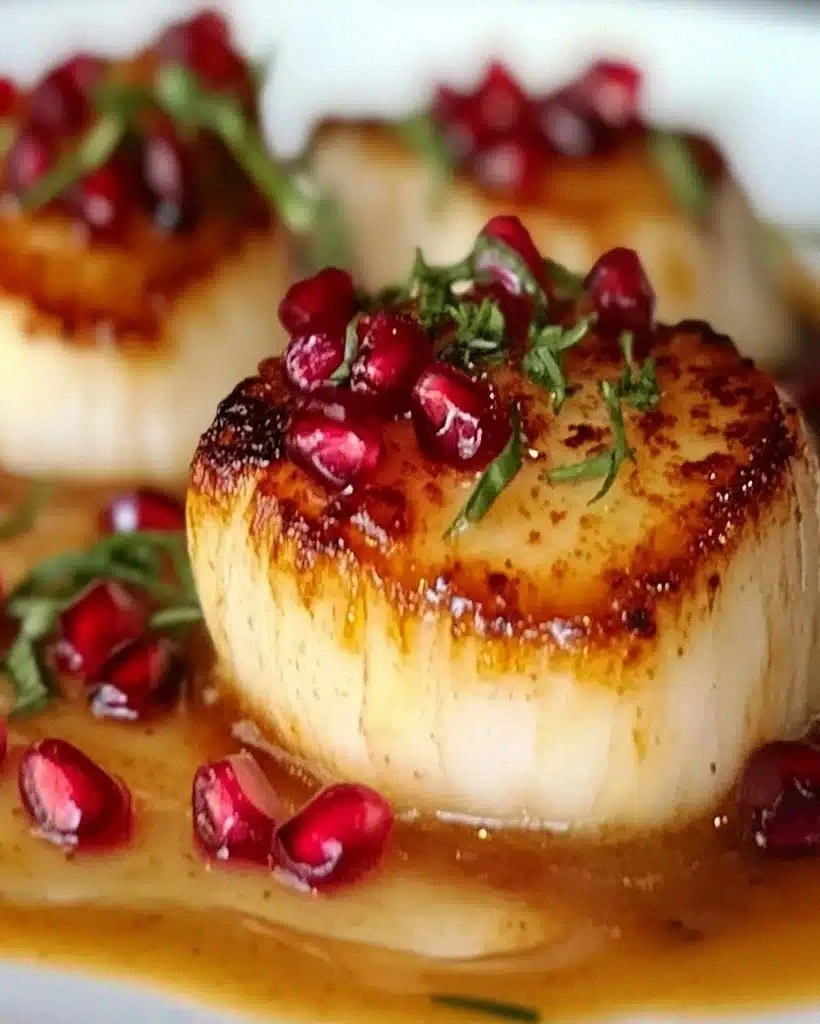
Picture this: it's 8 p.m. on a random Tuesday, and I'm standing in my kitchen in pajamas, clutching a $20 bill and a note that says "scallops or bust." My best friend had just texted me a blurry photo of restaurant scallops that looked like golden coins kissed by the gods, and I, competitive maniac that I am, replied "Hold my spatula, I'm making better ones." Thirty-five minutes later I'm plating seared scallops so gorgeous they could audition for a cooking show, their tops caramel-crisp, their centers the color of fresh cream, all swimming in a pomegranate beurre blanc so glossy it reflects my gleeful face like a mirror. The first bite? Sweet, salty, tangy, buttery, oceanic—basically a round-trip ticket to flavor paradise and back. I ate six of them standing up, sauce dripping down my wrist, phone buzzing with "HOW?!" texts from said friend. That, my friend, is the origin story of the recipe you're about to master.
Most home cooks treat scallops like prom-night limos: expensive, intimidating, and easy to wreck with one wrong move. Restaurants bank on that fear, charging $32 for four measly mollusks lounging on a smear of puree. Meanwhile, they're laughing all the way to the bank because the technique is dead simple once you know the rules—rules I'm about to tattoo onto your culinary brain. We'll talk hot-pan science, drying protocols, the "no-touch" sear, and how to build a pomegranate beurre blanc that basically tastes like liquid sunset. By the time you finish reading, you'll chuckle at menu prices and start inviting people over just to watch their eyes roll back in bliss.
What makes this version the Beyoncé of scallop recipes? First, we're using the cold-oil, hot-pan method for the most even, golden crust you've ever achieved. Second, the sauce swaps traditional white-wine acidity for pomegranate juice and a whisper of molasses—think Thanksgiving cranberry sauce that went to finishing school in France. Third, the whole shebang lands on your table in 45 minutes, including the Instagram photoshoot you'll inevitably stage. I dare you to taste this and not go back for seconds; I certainly failed that challenge.
Stay with me here—this is worth it. I'm going to walk you through every single step: choosing the right "dry" scallops, patting them like you're handling a newborn, laying them into a ripping-hot skillet, and nailing that 90-second flip. Then we'll whisk cold butter into pomegranate-spiked shallots until the sauce thickens into a silk scarf that cloaks each scallop in sweet-tart luxury. By the end, you'll wonder how you ever made it any other way.
What Makes This Version Stand Out
- Crust Like Shattering Sugar Glass: We sear in grapeseed oil until the surface caramelizes into a sheet of nutty crunch, then baste with butter for the final 30 seconds so the interior stays sashimi-tender. Other recipes skip the baste and end up with rubbery hockey pucks—don't be that cook.
- Sauce That Coats Like Velvet: Beurre blanc literally means "white butter," but ours blushes pomegranate-red. The juice's tannins stabilize the emulsion, so you can hold it warm without the dreaded break—meaning you can actually chat with guests instead of frantically whisking in panic.
- One-Pan Elegance: After the scallops exit, the same skillet catches shallots, pomegranate juice, and cream, scraping up those golden fond bits. Fewer dishes, deeper flavor, and you look like a kitchen wizard when the sauce comes together in under five minutes.
- Make-Ahead Friendly: You can prep the sauce base earlier in the day, chill it, then re-whip over low heat while the scallops sear. Hosting just became stress-free; pour yourself a glass of that leftover white wine and enjoy the applause.
- Showstopper Garnish Game: Top with ruby arils, whisper-thin jalapeño wheels, and a snow flurry of lemon zest. The dish goes from "nice dinner" to "wait, are you secretly a chef?" in ten seconds flat.
- Crowd-Pleasing Flavor Bridge: Sweet shellfish + tangy fruit + buttery richness hits every palate zone. I've served this to steak-only dads, keto cousins, and vegetarian aunts who miraculously "make exceptions" when they see that crimson sauce.
Alright, let's break down exactly what goes into this masterpiece, starting with the star players and the supporting cast that make every bite sing.
Inside the Ingredient List
The Flavor Base
First up, the scallops themselves. Look for U-10 or U-12 (10–12 per pound) dry-packed sea scallops; they feel firm, smell like an ocean breeze, and have zero milky liquid in the container. Wet scallops steam instead of sear, leaving you with a sad, gray blob that tastes like freezer-burned fish stick. If all you can find are wet ones, soak them for 30 minutes in 1 cup water + 1 tablespoon lemon juice + 1 tablespoon salt, then rinse and dry aggressively. You'll salvage 80 percent of the glory.
Next, grapeseed oil. Neutral, high-smoke-point, and cheap enough that you won't cry when you crank the pan to "surface of the sun." Olive oil burns at 410°F and leaves bitter notes that clash with pomegranate; save the EVOO for your salad. Canola works in a pinch, but grapeseed's clean flavor lets the shellfish and butter do the talking.
The Texture Crew
Unsalted butter: European-style (82–84 percent fat) melts slower, giving you a wider window to mount the beurre blanc without greasy separation. Cut it cold into half-inch cubes; warm butter is the fastest route to a broken emulsion. You'll use two tablespoons for basting the scallops and the rest for whipping into the sauce. Trust me, you'll want the entire stick—this sauce disappears faster than free samples at Costco.
Shallots provide gentle allium perfume without the sulfur punch of onions. Finely minced, they dissolve into the juice and leave tiny confetti bits that cling to each scallop. In a hurry? Sub the white part of a leek or even green onion, but shallots are the classy choice.
The Unexpected Star
Pomegranate juice: Fresh is magnificent, but 100 percent bottled (like POM Wonderful) is consistent and saves you from seeding half the produce aisle. Reduce it with a touch of molasses and the flavor concentrates into a sweet-tart syrup reminiscent of balsamic but brighter. If you can't find pomegranate, use cranberry juice and a teaspoon of honey; you'll land in the same zip code.
Heavy cream stabilizes the sauce so you can hold it warm for up to an hour without dreaded butter separation. Just two tablespoons do the trick; more and you'll taste diner gravy. Skip the half-and-half—it lacks the fat to emulsify properly and you'll end up with an oily slick that looks like a failed science fair volcano.
The Final Flourish
Fresh arils give pops of juicy crunch that contrast the buttery sauce. Buy a whole pomegranate, score it around the equator, break it apart underwater, and the seeds sink while the membrane floats—no red-splatter crime scene on your white tee. No patience? Substitute toasted chopped pistachios for crunch plus a squeeze of pomegranate molasses for tartness.
Lemon zest wakes everything up; use a Microplane and add it at the very end so the volatile oils survive. Bottled juice is fine in a college dorm, but we're grown-ups now—zest only takes ten seconds and smells like sunshine captured in a grater.
Everything's prepped? Good. Let's get into the real action, where smoke, sizzle, and sauce combine into edible theater.
The Method — Step by Step
- Pat, Pat, and Pat Again: Lay scallops on a paper-towel-lined sheet, press another towel on top, and pretend you're giving them a firm sports massage. Moisture is the mortal enemy of crust; if you think they're dry, pat once more. Season generously with kosher salt and freshly cracked black pepper just before they hit the pan—any earlier and salt draws out liquid, undoing your drying marathon. Let them rest at room temperature for 10 minutes while you heat the skillet; starting cold guarantees even cooking.
- Heat That Pan Like It Owes You Money: Place a heavy stainless or cast-iron skillet over medium-high heat for 2 minutes. Flick a few drops of water onto the surface; if they skitter like nervous ice dancers, you're ready. Pour in 2 tablespoons grapeseed oil and swirl to coat. The oil should shimmer instantly but not smoke—if it starts to ripple aggressively, lower the heat for 30 seconds; burnt oil equals bitter scallops.
- The No-Touch Sear: Gently lay scallops flat, one o'clock position, 12 o'clock, etc., leaving one inch between each so steam can escape. Now—and this is crucial—do not move them. Not a nudge, not a peek. Set a timer for 90 seconds. The bottoms will develop a golden crust that looks like toasted caramel. If you've ever struggled with this, you're not alone—and I've got the fix: patience, young grasshopper.
- Butter-Baste Flip: Add 2 tablespoons cold butter plus a smashed garlic clove and a thyme sprig. Once butter foams, flip scallops with tongs. Tilt the pan and spoon nut-brown butter over tops for 30 seconds. This finishes cooking while glazing the surface with nutty aroma. Transfer scallops to a warm plate; they'll rest while we build sauce in the same pan.
- Build the Pomegranate Base: Return skillet to medium heat, add minced shallots, and sauté 30 seconds until translucent. Pour in ¾ cup pomegranate juice, 1 tablespoon pomegranate molasses, and 2 tablespoons heavy cream. Simmer 2 minutes, scraping browned bits with a wooden spoon. The liquid should reduce by half and coat the back of the spoon like thin maple syrup.
- Mount the Beurre Blanc: Lower heat to low. Whisk in cold butter cubes one at a time, letting each piece melt before adding the next. Picture you're tucking tiny buttery babies into a warm blanket—gentle and gradual. If the sauce breaks (looks oily), whisk in a teaspoon of cold water or cream; the temperature drop helps re-emulsify. Season with pinch of salt and a few cracks of white pepper.
- Finish with Zing: Off heat, stir in lemon zest and a handful of fresh pomegranate arils for pops of color. Swirl the pan; the sauce should ripple like silk. Taste and adjust—more molasses if you want sweeter, more lemon if you want brighter. Remember: you can add, but you can't subtract, so sneak up on the balance.
- Plate Like a Pro: Spoon a crescent of sauce onto warm plates, nestle scallops crown-side up, then drizzle a little extra so it pools like edible enamel. Garnish with extra arils, micro-greens, or thin jalapeño wheels for festive heat. Serve immediately with crusty bread to mop every last crimson streak.
That's it—you did it. But hold on, I've got a few more tricks that'll take this to another level, including the temperature rule nobody follows and why your nose knows best.
Insider Tricks for Flawless Results
The Temperature Rule Nobody Follows
Most failures happen because the scallops hit a lukewarm pan and stew in their own juice. Buy an infrared thermometer (twenty bucks, endless bragging rights) and aim for 425–450°F surface temp. No gadget? The water-drop test works, but add a breadcrumb; if it turns golden in 15 seconds, you're money. A friend tried skipping this step once—let's just say it didn't end well, and we still tease him with hashtag #scallopboil.
Why Your Nose Knows Best
Trust your olfactory radar. When the kitchen smells like toasted hazelnuts and sweet ocean air, you're 30 seconds from perfect. If you detect acrid bitterness, the oil is breaking down; lower heat immediately and soldier on. Our brains evolved to detect these micro-changes—ignore them and you'll serve disappointment on a porcelain platter.
The 5-Minute Rest That Changes Everything
After searing, park scallops on a wire rack set over a sheet pan in a 200°F oven. The gentle heat equalizes internal temp, yielding edge-to-edge tenderness while you finish the sauce. Restaurants call this "tempering"; I call it insurance against rubbery centers. Bonus: you can hold them 15 minutes if your dinner date is running late.
Smoke Alarm Etiquette
Searing at high temp will smoke; it's normal. Disable your detector temporarily, open a window, and place a damp towel over the kitchen door gap to keep peace with roommates. Better yet, invite them over—shared scallops equal forgiveness for every false alarm.
Creative Twists and Variations
This recipe is a playground. Here are some of my favorite ways to switch things up:
Citrus-Beet Beurre Blanc
Swap pomegranate for fresh blood-orange juice and fold in roasted beet puree for a shocking magenta hue. The earthy-sweet notes pair beautifully with the natural brine of the scallops, and the color alone will have guests snapping photos before the first bite.
Smoky Bacon Edition
Start by rendering two strips of diced bacon; remove crispy bits and sear scallops in the fat. Finish the sauce as written, then sprinkle bacon on top. Salty-smoky-sweet trifecta achieved—basically breakfast for dinner, but make it fancy.
Spicy Thai Remix
Replace butter with coconut milk and whisk in a tablespoon of red curry paste plus lime juice. Garnish with Thai basil and bird's-eye chilies. You'll land somewhere between French technique and Bangkok night-market swagger.
Surf-and-Turf Lite
Top each scallop with a sliver of seared foie gras or butter-basted lobster knuckle meat. Over the top? Absolutely. But if you've ever wanted to taste luxury without refinancing your house, this is your moment.
Winter Wonderland
Stir white chocolate shavings into the finished sauce—just a teaspoon. The cocoa butter adds unctuous body and a subtle sweetness that plays shockingly well with pomegranate. Sounds wild, but pastry chefs have been pairing chocolate and shellfish for decades; we're simply borrowing brilliance.
Weeknight 15-Minute Hack
Use pre-cooked packaged scallops (found near the smoked salmon), skip the sear, and warm them in the sauce for two minutes. Not restaurant-perfect, but better than take-out pad thai on a frantic Wednesday.
Storing and Bringing It Back to Life
Fridge Storage
Cool leftover scallops within two hours, refrigerate in an airtight container lined with paper towel to absorb moisture, and consume within two days. The sauce keeps four days; reheat gently over low, whisking in a splash of cream to re-emulsify. Add a tiny splash of water before reheating—it steams back to perfection and prevents rubbery edges.
Freezer Friendly
Freeze uncooked scallops on a parchment-lined sheet until solid, then transfer to a zip bag with parchment between layers; use within three months. Thaw overnight in the fridge, never on the counter. Cooked scallops can be frozen, but texture suffers; reserve those for seafood chowder or salad where perfection isn't paramount.
Best Reheating Method
Place scallops in a steamer basket over barely simmering water for 90 seconds, just until warmed through. Microwaves turn them into elastic bands; ovens dry them out. Pair with freshly warmed sauce and no one will know you're serving yesterday's triumph.